


UK businesses face real challenges managing working capital. Bigger sellers want to get paid faster, while smaller buyers need more time to pay their suppliers. Both sides are trying to free up cash and keep their operations running smoothly.
What is your Cash Conversion Cycle (CCC)?
Your cash conversion cycle (CCC) shows how quickly your company turns investments into cash. It’s built from three key components:
- Days Payable Outstanding (DPO) measures how long you take to pay suppliers. A 30-day DPO means you typically pay invoices a month after receiving them. Higher DPO improves cash flow by keeping money in your business longer.
- Days Sales Outstanding (DSO) tracks how long customers take to pay you. If your DSO is 35 days, you’re waiting over a month for payment after invoicing. Lower DSO gets cash in faster.
- Days Inventory Outstanding (DIO) shows how long stock sits before selling. A 45-day DIO means inventory moves every six weeks. Reducing DIO frees up working capital.
Use this formula:
For example, if a UK manufacturer brings in £2M each month, holds inventory for 45 days, waits 35 days to get paid, and pays suppliers in 13 days, their CCC is 67 days. That means £4.47M stays tied up in the business.
If you improve your CCC by even 15 to 20 days, you can free up millions for growth, paying down debt, or handling tough times.
Sellers: How to reduce DSO without losing customers
If you sell to other businesses, you know the drill. Customers want flexible payment terms, but you need steady cash flow. Old-school solutions like invoice factoring or chasing payments can hurt relationships or cost too much.
Modern B2B payment platforms like Mondu let you offer net terms and instalments to your customers, but you still get paid within days. The payment provider takes care of credit risk and collections. You focus on selling.
These solutions work for both online sales and deals handled offline by your sales team. You can offer flexible terms during negotiations and get paid quickly once the order is approved. This helps with big, complex deals where payment flexibility really matters.
Buyers: How to extend DPO when suppliers want fast payment
Smaller businesses often run into trouble because suppliers want their money fast, but cash flow is unpredictable. Reverse factoring needs supplier approval, which you may not get.
Flexible payment tools, like MonduFlex, let you extend payment terms up to 60 days without involving the supplier. You keep good supplier relationships and get more breathing room.
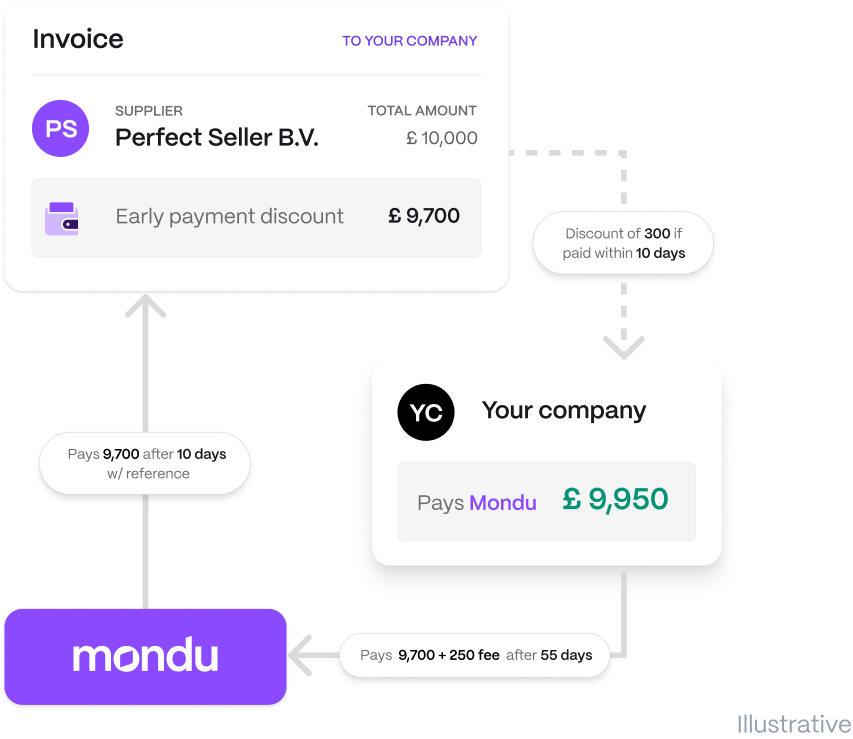
Example scenario: You receive a £10,000 invoice with 3% early payment discount if paid within 10 days. Using MonduFlex, you capture the £300 discount while extending your payment to 55 days, paying a 2.5% service fee (for example). Net result: £50 savings plus 45 additional days of cash flow.
How different industries use these tools
- Manufacturing and wholesale: Large sellers use B2B payment solutions to get paid quickly while offering flexible terms.
- SMBs and growing companies: Focus on extending DPO to manage cash flow between buying inventory and making sales.
- Service businesses: Use payment flexibility to handle project costs while waiting for client payments.
Steps to optimise your CCC
For sellers:
- Look at how and when customers pay.
- Check solutions providers that guarantee quick payouts, like BNPL or digital trade accounts.
- Compare the costs to the benefits.
- Start with key customers and expand.
For buyers:
- Check supplier terms and look for early payment discounts.
- Use flexible payment tools for big invoices or tight cash flow periods.
- Make sure payment changes don’t hurt supplier relationships.
What to measure
Sellers:
- How much faster you get paid.
- Customer satisfaction and retention.
- Working capital freed up.
- Costs compared to old methods.
Buyers:
- How much more time you get to pay.
- How often you grab early payment discounts.
- Cash flow improvement.
- Supplier relationships.
Universal metrics:
- Overall CCC improvement.
- ROI from payment solutions.
- Efficiency gains from automation.
Final thoughts
Payment flexibility gives you an edge. If you make it easy for customers to pay and get more time to pay your own bills, you’ll have more cash to grow your business and build strong relationships.
Ready to change how you manage cash? You can reduce DSO, extend DPO, and keep your business moving forward. If you want to see how Mondu’s B2B payment solutions work, request a demo and find out what fits your needs.
FAQ Cash Conversion Cycle
The Cash Conversion Cycle (CCC) measures how quickly your company turns investments into cash, calculated using the formula: CCC = DIO + DSO – DPO. It combines three key metrics: Days Inventory Outstanding (how long stock sits before selling), Days Sales Outstanding (how long customers take to pay), and Days Payable Outstanding (how long you take to pay suppliers). Improving your CCC by just 15 to 20 days can free up millions in working capital for growth, debt repayment, or managing difficult periods.
Modern B2B payment platforms like Mondu allow sellers to offer flexible payment terms such as net terms and instalments whilst still receiving payment within days. The payment provider handles credit risk and collections, so you can focus on selling rather than chasing payments. These solutions work for both online sales and offline deals handled by your sales team, making them particularly useful for large, complex transactions where payment flexibility is crucial.
Flexible payment tools like MonduFlex enable buyers to extend payment terms up to 60 days without involving the supplier, preserving good relationships whilst improving cash flow. For example, with a £10,000 invoice offering a 3% early payment discount for payment within 10 days, you can capture the £300 discount whilst extending payment to 55 days by paying a 2.5% service fee (only £250), saving £50.
For sellers, track how much faster you receive payment, customer satisfaction and retention rates, working capital freed up, and costs compared to previous methods. Buyers should monitor extended payment timeframes, frequency of capturing early payment discounts, cash flow improvements, and supplier relationship health. Universal metrics for both include overall CCC improvement, ROI from payment solutions, and efficiency gains from automation.
